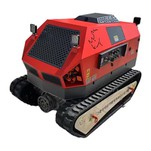

In engineering construction, emergency rescue operations, and various outdoor work environments, a stable and reliable power supply is a critical factor in ensuring the successful completion of tasks. Today, let us introduce a piece of equipment capable of providing powerful energy support: the gasoline hydraulic power unit.
The Gasoline Hydraulic Power Unit: An Overview
As the name suggests, one can broadly deduce the basic composition and operating principles of a gasoline hydraulic power unit. It utilizes gasoline as fuel; an internal combustion engine converts the chemical energy of the gasoline into mechanical energy, which is then efficiently transformed into hydraulic energy by a hydraulic system to provide power for a wide range of hydraulic equipment.
One of the core components of this power unit is the gasoline engine. Gasoline engines are characterized by their rapid startup capabilities and stable power output. When an operator starts the power unit, gasoline combusts within the engine cylinders, driving the pistons in a reciprocating motion. This motion, transmitted through connecting rods, causes the crankshaft to rotate, thereby converting thermal energy into mechanical energy. The power generated during this process is then transmitted to the hydraulic pump.
The hydraulic pump is another critical component of the gasoline hydraulic power unit. Its function is to convert the mechanical energy received from the engine into hydraulic energy. The hydraulic pump houses a precise internal mechanical structure; when mechanical energy is applied to the pump, it draws hydraulic fluid from the reservoir, pressurizes it, and outputs it into the hydraulic system. As the hydraulic fluid circulates through the system-much like blood flowing through the human body-it transmits power to every location where it is needed.
The gasoline hydraulic power unit offers numerous significant advantages. First and foremost, it boasts a high degree of portability. Compared to larger-scale power supply equipment, the gasoline hydraulic power unit is compact in size and relatively lightweight, making it easy to transport and maneuver. This portability is particularly crucial when moving between different work zones on a construction site, or during operations such as wilderness rescue and field exploration, where it can significantly enhance operational efficiency.
Gasoline Hydraulic Power Unit: Key Details
Secondly, it is capable of delivering a powerful energy output. Despite its compact dimensions, the gasoline hydraulic power unit-thanks to a well-engineered design of its engine and hydraulic system-can generate high pressure and flow rates, thereby satisfying the diverse power requirements of various hydraulic tools and equipment. Whether it involves demolition equipment-such as hydraulic shears and hydraulic breakers-or various hydraulic lifting devices, all can function effectively when powered by a gasoline-driven hydraulic power unit.
Furthermore, operation is relatively straightforward. Operators do not require highly specialized technical expertise; with just some basic training, they can master essential procedures such as starting and stopping the unit, as well as adjusting basic operating parameters. Moreover, these power units typically feature intuitive control panels, allowing operators to conveniently monitor the equipment's operational status-including parameters such as oil pressure and oil temperature.
In practical applications, gasoline hydraulic power units serve a remarkably wide range of purposes. In the field of construction demolition, they provide the necessary power for equipment like hydraulic breakers to fracture concrete structures, thereby significantly boosting demolition efficiency. In firefighting and rescue scenarios, these power units can drive tools such as hydraulic spreaders and hydraulic rams, enabling the breaching of obstacles and the rescue of trapped individuals. In the agricultural sector, where certain large-scale farm machinery requires hydraulic power to execute specific tasks, a gasoline hydraulic power unit can serve as a temporary power source, facilitating agricultural production activities.
Of course, certain precautions must be observed when utilizing a gasoline hydraulic power unit. Since gasoline is used as the fuel source, it is essential to ensure that the working environment is well-ventilated to prevent the accumulation of harmful fumes resulting from gasoline evaporation. Additionally, the power unit requires regular maintenance and servicing-including checks on the engine oil and the hydraulic system's fluid levels-to ensure the equipment continues to operate smoothly and reliably.
In summary, thanks to its portability, robust power output, and ease of operation, the gasoline hydraulic power unit has become an indispensable power supply device across numerous sectors, providing vital support for the successful execution of a wide variety of operations.