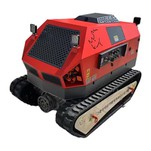

Emergency response vehicles serve as core equipment for addressing urgent scenarios such as natural disasters and engineering accidents; their design must strike a balance between power performance, functional expandability, and environmental adaptability. Taking the common flood control and drainage emergency vehicle as an example, its core functions revolve around rapid response and multi-scenario operations; through a diesel power system, ample cargo space, and customized configurations, it meets diverse requirements ranging from drainage and rescue to equipment transport.
In terms of power configuration, flood control and drainage emergency vehicles typically feature diesel engines with a rated power output reaching up to 105 kW. Coupled with a designed top speed of 140 km/h, this ensures rapid arrival at the scene, even under complex road conditions. The primary advantages of diesel engines lie in their stable torque output and high fuel efficiency, making them particularly well-suited for prolonged, low-speed operational scenarios-such as continuous drainage or providing power for equipment. For instance, a specific model of emergency vehicle achieves a 20% reduction in energy consumption by optimizing the integration between its engine and hydraulic systems, all while maintaining the continuous, high-efficiency operation of its drainage pumps.
Functional expandability constitutes another critical feature of emergency response vehicles. With a rated payload capacity of 3,295 kg, these vehicles can carry equipment such as drainage pumps, generators, and demolition tools, utilizing customized designs to facilitate modular installation. For example, in scenarios involving urban flooding, the vehicle can be configured with high-flow submersible pumps-each capable of a drainage rate exceeding 1,000 cubic meters per hour. Conversely, for rescue operations in mountainous terrain, traction devices or lighting towers can be added to adapt to varying topographical requirements. Furthermore, the vehicles feature an "engineering yellow" paint scheme; compliant with safety standards, this coloring enhances visibility and recognition during nighttime operations or adverse weather conditions.
Regarding environmental adaptability, emergency response vehicles are engineered to withstand extreme conditions, such as muddy terrain and wading through water. The vehicle's dimensions (measuring 5,995 mm in length) have been optimized to ensure ample internal space for equipment while simultaneously maintaining maneuverability and clearance for urban road travel. The three-seat cabin design accommodates a crew comprising an operator, a technician, and a safety officer, thereby facilitating seamless collaborative operations. Additionally, certain models are equipped with a snorkel system, enabling the vehicle to briefly traverse water depths of up to 0.8 meters-a capability that ensures the rapid deployment of rescue efforts during the initial stages of a flood.