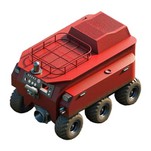

Emergency rescue robots are automated devices specifically designed to execute rescue missions during disasters, accidents, or other emergency situations. They are capable of entering hazardous zones-such as sites involving fires, explosions, hazardous chemical spills, earthquakes, or floods-to perform tasks such as search operations, reconnaissance, rescue, and emergency mitigation, thereby sparing humans from direct exposure to danger. These robots are typically equipped with high-resolution cameras, various sensors, thermal imaging systems, and explosion-proof emergency response modules; this allows them to provide real-time situational feedback within complex environments, assisting command centers in making rapid, informed decisions. Furthermore, they possess advanced capabilities such as precise positioning, dynamic obstacle avoidance, and intelligent object recognition, enabling them to accurately pinpoint the locations of trapped individuals and significantly enhance rescue efficiency. For instance, the Unitree B1 quadruped robot can conduct reconnaissance from a safe distance away from firefighters, promptly detecting and reporting potential hazards to provide critical support to the rescue team. As technology continues to advance, emergency rescue robots are playing an increasingly vital role in improving both the efficiency and safety of rescue operations.
Analysis of the Current State of the Emergency Rescue Robot Industry
A Persistent Gap in Rescue Equipment Development Between Domestic and International Markets: There remains a disparity between the development of rescue equipment in China and that of the international community. Foreign manufacturers of large-scale rescue robots have achieved a high degree of intelligence in their equipment, having conducted extensive research into advanced functions such as righting overturned objects, lifting, towing, hoisting, hydraulic spreading, structural demolition, and in-place turning. Currently, China's domestic engineering rescue equipment sector still relies primarily on general-purpose construction machinery; however, there is a growing surge of research interest and investment focused on enhancing the intelligence, digitalization, and specialization of these systems.
A Late Start in the R&D of Domestic Aerial and Underwater Rescue Robots: Compared to ground-based robots, the research and development (R&D) of aerial and underwater rescue robots in China began at a much later stage, resulting in a relatively weaker foundational base. Aerial rescue robots-such as emergency response drones-offer unique advantages in areas such as delivering supplies to disaster zones, conducting aerial reconnaissance, and serving as communication relays. However, their development remains constrained by a long-standing reliance on imported key technologies-specifically flight control systems, autonomous navigation modules, and components capable of withstanding wind and rain. Consequently, their current application within the industry remains largely confined to preliminary stages, such as firefighting support and routine inspections. Underwater rescue robots face even higher technical barriers, requiring sophisticated capabilities in high-pressure sealing, waterproof control systems, sonar-based recognition, and adaptability to complex underwater currents. Most domestic enterprises in this sector have emerged only within the last decade; their products are predominantly in the prototype testing or small-batch deployment phases, and there remains a significant gap in practical operational experience when compared to leading international nations such as the United States, Norway, and Japan. Nevertheless, as the frequency of extreme weather events increases and emergency scenarios become more diverse, aerial and underwater robots are rapidly emerging as a new focal point for both scientific research and industrial strategic planning within China. Continuous Technological Advancement and Enhanced Performance of Emergency Rescue Robots: Driven by the rapid development of technologies such as the Internet of Things (IoT), cloud computing, and artificial intelligence (AI), the field of emergency rescue robots is poised for accelerated growth. Since 2023, my country's industry for unmanned and intelligent equipment has expanded rapidly; furthermore, the collaborative capabilities among various types of unmanned intelligent devices have seen continuous innovation. A comprehensive, systematic framework is now taking shape, encompassing a full spectrum of operations-from reconnaissance and mapping to on-site situational awareness, positioning and search, and ultimately, actual rescue operations and emergency support.
Cross-Sectoral Integration and the Emergence of Innovative Applications: As a nation frequently affected by a wide variety of disasters, my country requires its emergency rescue robots to be developed within a holistic, systems-oriented framework-one that prioritizes innovation, comprehensiveness, and modernization. In recent years, my country's emergency rescue robot sector has entered a phase of rapid initiation and expansion, promising a broad and bright future. However, from a macro perspective, the sector remains in the early stages of application; few solutions have been truly implemented in the field, and large-scale adoption has yet to be achieved. Currently, the majority of my country's emergency rescue robots are concentrated in general-purpose domains and lower-end market segments. There is an urgent need to prioritize and advance the cross-sectoral integration and innovation of intelligent equipment, accelerate its widespread deployment, and establish a comprehensive, intelligent emergency rescue equipment ecosystem.
Key Development Trends for Emergency Rescue Robots
Diversification: Beyond standard functions such as search and rescue or material transport, these robots are expanding their applications into various other domains, including environmental monitoring, meteorological observation, and disaster early warning systems.
Integration: The structural design of rescue robots is evolving toward a holistic approach that integrates environmental adaptability, structural engineering, material science, and drive systems to meet complex, specific, or general-purpose operational requirements.
Modularization and Scalability: Robots and specific modules can be rapidly interchanged to suit varying rescue demands, thereby significantly enhancing the equipment's adaptability and operational flexibility during rescue missions.
Intelligent Capabilities: The intelligence of rescue robots is advancing toward precise situational awareness in extreme environments, autonomous decision-making based on multi-dimensional data, intelligent fault tolerance, and dynamic collaborative operations among multiple robotic units.
Precision Communication: Communication technologies are evolving to enable ultra-fast network deployment among devices, as well as long-range, high-penetration, and precise transmission of multi-dimensional information within complex spatial environments.
Collaborative Operations: Rescue equipment and robots are increasingly designed to operate in concert, forming a cohesive, intelligent rescue system.
Enhanced Environmental Adaptability: The performance of rescue robots is trending toward higher reliability, lower energy consumption, and superior adaptability to diverse and challenging environmental conditions.