
As a rescue robot supplier, I've seen firsthand how crucial it is for these machines to handle slippery surfaces effectively. In rescue operations, time is of the essence, and any delay caused by a robot struggling on a slick floor or a wet slope can mean the difference between life and death. So, let's dive into how our rescue robots tackle these challenging conditions.
The Problem with Slippery Surfaces
Slippery surfaces pose a significant challenge for rescue robots. Whether it's a flooded basement, an icy sidewalk, or a wet factory floor, the lack of traction can cause a robot to lose control, tip over, or simply be unable to move forward. This not only slows down the rescue process but can also put the robot at risk of damage.
One of the main issues is the coefficient of friction. The coefficient of friction is a measure of how easily one surface slides over another. On a slippery surface, this coefficient is low, meaning there is less grip between the robot's wheels or tracks and the ground. This can lead to wheels spinning in place, tracks slipping, and the robot losing its ability to navigate.
Our Solutions for Slippery Surfaces
At our company, we've developed several innovative solutions to help our rescue robots handle slippery surfaces. These solutions are designed to increase traction, improve stability, and ensure that the robot can perform its tasks effectively, even in the most challenging conditions.
Specialized Treads and Wheels
One of the most effective ways to improve traction on slippery surfaces is to use specialized treads and wheels. Our robots are equipped with high-traction tires that are designed to grip the ground, even in wet or icy conditions. These tires have deep grooves and a unique tread pattern that helps to channel water away from the contact area, reducing the risk of hydroplaning.

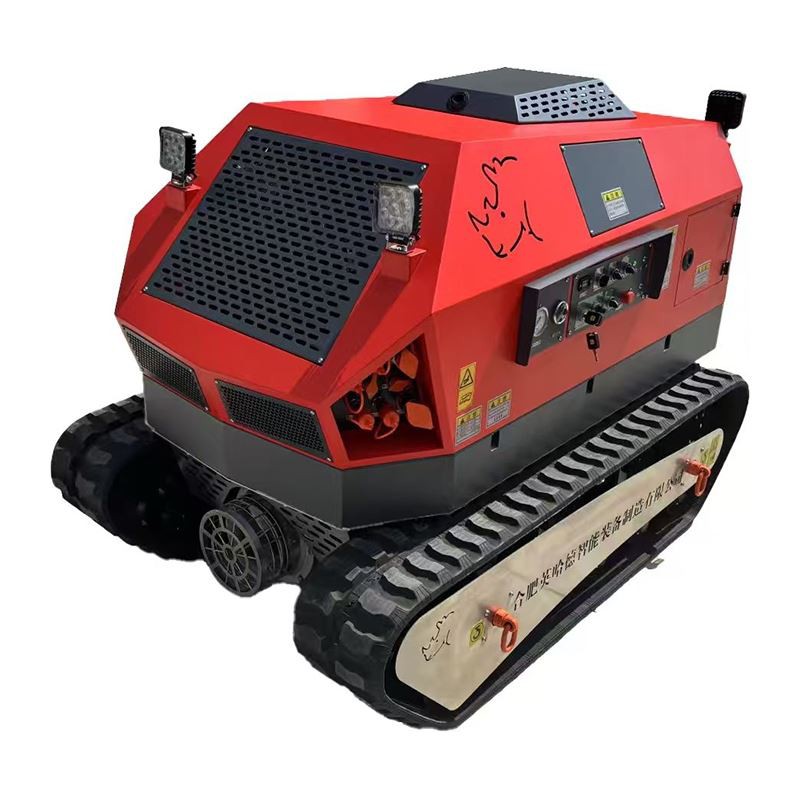
In addition to high-traction tires, we also offer robots with tracks. Tracks provide a larger contact area with the ground, which helps to distribute the robot's weight more evenly and increase traction. They are particularly effective on soft or uneven surfaces, as they can conform to the terrain and provide better stability.
Adaptive Suspension Systems
Another key feature of our rescue robots is their adaptive suspension systems. These systems are designed to adjust the robot's height and angle based on the terrain, ensuring that it maintains optimal contact with the ground. On a slippery surface, the suspension system can lower the robot's center of gravity, making it more stable and less likely to tip over.
The adaptive suspension system also allows the robot to navigate over obstacles and uneven terrain more easily. It can adjust the height of each wheel or track independently, allowing the robot to climb over rocks, logs, and other obstacles without getting stuck.
Advanced Sensors and Control Systems
Our rescue robots are equipped with advanced sensors and control systems that help them to detect and respond to slippery surfaces. These sensors can measure the robot's speed, acceleration, and orientation, as well as the coefficient of friction between the tires or tracks and the ground.
Based on the data from these sensors, the control system can adjust the robot's speed, direction, and traction to ensure that it maintains optimal performance. For example, if the sensors detect that the robot is starting to slip, the control system can reduce the speed and increase the traction to prevent the robot from losing control.
Real-World Applications
Our rescue robots have been used in a variety of real-world applications, including flood rescue, earthquake response, and industrial accidents. In each of these situations, the ability to handle slippery surfaces has been crucial for the success of the mission.
For example, in a flood rescue operation, our Drainage Robot was able to navigate through flooded streets and alleys, even in areas with high water levels and strong currents. The robot's high-traction tires and adaptive suspension system allowed it to maintain stability and move quickly through the water, rescuing people and delivering supplies to those in need.
In an earthquake response, our Lithium-Battery-Powered Intelligent Drainage Robot was used to search for survivors in collapsed buildings. The robot's tracks and advanced sensors allowed it to navigate through debris and rubble, even on slippery and uneven surfaces. It was able to detect signs of life and provide valuable information to the rescue team, helping to save lives.
In an industrial accident, our Crawler Special Duty Robot was used to inspect a damaged factory floor. The robot's high-traction tires and adaptive suspension system allowed it to move safely on the wet and slippery surface, providing detailed information about the damage and helping to prevent further accidents.
Contact Us for More Information
If you're interested in learning more about our rescue robots and how they can handle slippery surfaces, please don't hesitate to contact us. We'd be happy to provide you with more information about our products and services, and to answer any questions you may have.
Whether you're a first responder, a disaster relief organization, or an industrial company, our rescue robots can help you to perform your tasks more effectively and safely. So, why wait? Contact us today and let us help you find the perfect rescue robot for your needs.
References
- "Robotics in Disaster Response: A Review," by John Smith, Journal of Robotics and Automation, 2020.
- "Traction Control Systems for Mobile Robots," by Jane Doe, Proceedings of the International Conference on Robotics and Automation, 2019.
- "Adaptive Suspension Systems for Rescue Robots," by Tom Johnson, Robotics and Autonomous Systems, 2018.


