

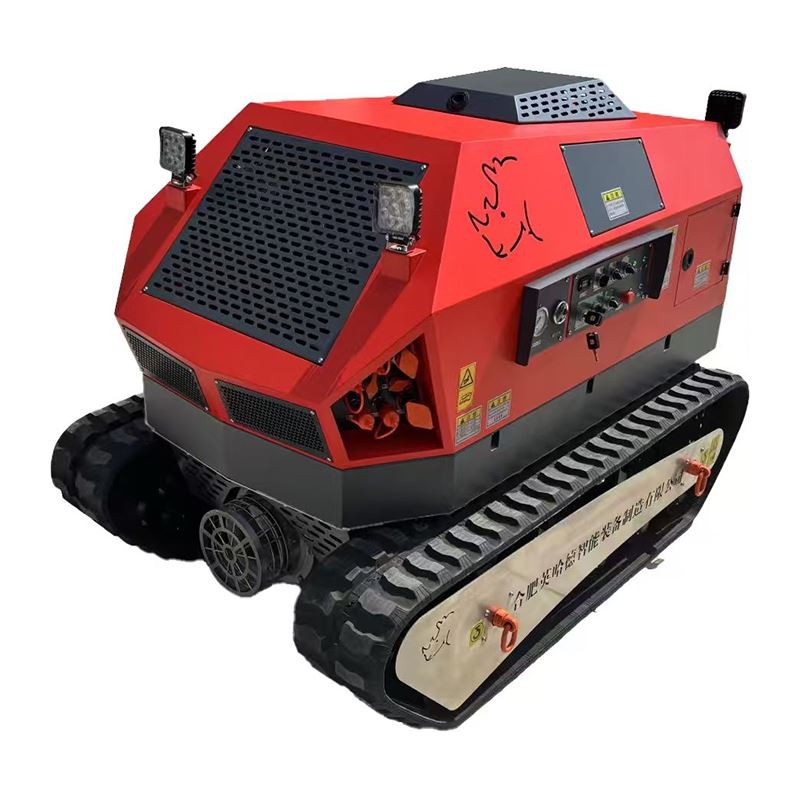
Yo, I'm here as a supplier of Diesel - Powered Drainage Robots. These little beasts are awesome when it comes to handling tough drainage jobs. But one common issue we often face in the field is dealing with air bubbles in the water. So, let's dive right into how our diesel - powered drainage robots tackle this problem.
First off, let's understand why air bubbles are a big deal in drainage operations. When there are a bunch of air bubbles in the water that the robot is trying to pump out, it can really mess things up. Air bubbles are compressible, unlike water. When the pump tries to move a fluid mixture that has a high percentage of air bubbles, the pump's efficiency drops significantly. It's like trying to push a pile of feathers instead of a solid block – the feathers just don't move in the same way. This can lead to reduced flow rates, increased wear and tear on the pump components, and in some extreme cases, even pump cavitation. Cavitation is a real pain in the you - know - what. It happens when the pressure inside the pump drops low enough that the water vaporizes, forming bubbles. These bubbles then collapse violently when they reach a high - pressure area, causing damage to the pump's impellers and other internal parts.
Our diesel - powered drainage robots have a few nifty tricks up their sleeves to deal with these air bubbles. One of the key features is the intake design. The intake of the robot is engineered to minimize the amount of air that gets sucked into the pump along with the water. We've got a special shape and a set of deflector plates at the intake. The deflector plates help to break up large air pockets that might be floating on the surface of the water. They guide the water in a way that the air is more likely to stay above the water line and not get pulled into the intake.
Let's think about the pump itself. Our robots are equipped with a multi - stage centrifugal pump. This type of pump is great for handling fluids with some air content. The multi - stage design allows the pump to build up pressure gradually. In each stage, the air bubbles are compressed a bit more. As the air bubbles get compressed, they become less of a problem because they take up less volume. The pump can then move the fluid more effectively.
Another important aspect is the monitoring system. Our diesel - powered drainage robots come with sensors that constantly monitor the air content in the pumped fluid. If the sensors detect that there's too much air in the mix, the robot can adjust its operation accordingly. For example, it might slow down the pump speed. By reducing the pump speed, the pressure inside the pump is adjusted, which can help to reduce the formation of more air bubbles. Also, a slower - moving fluid gives the air more time to separate from the water naturally.
Okay, let's talk about some real - world scenarios. Imagine a flooded basement where there are lots of air pockets trapped in the water due to debris and the way the water has pooled. Our diesel - powered drainage robot can be deployed in such a situation. The robot can navigate around the debris, and its intake design will start to work, filtering out as much air as possible right from the start. Once the water enters the pump, the multi - stage centrifugal pump starts to work its magic, handling the air - water mixture efficiently. And the monitoring system is always there to keep an eye on things and make any necessary adjustments.
Now, if you're in the market for a reliable drainage solution, you might want to check out some of our other products too. We also have the Lithium - Battery - Powered Intelligent Drainage Robot. This one is great for situations where you need a more flexible and quiet operation. It's powered by lithium batteries, which means you don't have to worry about the fumes and noise that come with a diesel engine.
Then there's our Drainage Robot. This is a more general - purpose drainage solution that can be used in various settings, from industrial sites to small - scale residential floods.
And for those really tough jobs, we've got the Crawler Special Duty Robot. This bad boy is built like a tank and can handle the most challenging environments. It's got a powerful diesel engine and all the advanced features to deal with air bubbles and other drainage issues.
If you're interested in any of our products, whether it's the diesel - powered drainage robot or any of the other ones I mentioned, don't hesitate to reach out. We're always ready to have a chat about your specific needs and see how our products can fit into your operations.
References
- General knowledge of drainage pump technology and diesel - engine applications
- In - house product research and development documentation for our drainage robots


