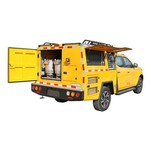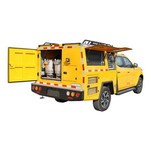

Multifunctional Mobile Operations Unit
The emergency rescue vehicle functions much like a "Transformer," utilizing a modular design to achieve multi-purpose functionality within a single vehicle:
Basic Configuration: An onboard generator provides stable power; a lighting system supports night operations; and dedicated storage compartments allow for the organized housing of tools for forcible entry, medical aid, and other tasks.
Extended Capabilities: Certain models are equipped with drone launch-and-recovery platforms, temporary communication base stations, or water purification systems, enabling them to adapt to complex and challenging environments.
Spatial Design: The vehicle features expandable side compartments that can transform into a temporary command center within just three minutes, providing a workspace capable of accommodating 8 to 10 personnel for collaborative operations.
Precise Matching to Disaster Scenarios
Different types of disasters require specialized vehicle configurations:
Flood Rescue: Standard equipment includes a system for launching and retrieving assault boats, as well as underwater detection gear; the vehicle's cabin requires specialized waterproofing treatment.
Mountain Search and Rescue: Features an enhanced chassis designed for superior off-road traversability, along with rock-face anchoring points and specialized high-angle rescue equipment.
Chemical Incidents: Utilizes explosion-proof vehicle models, paired with hazardous gas detectors and self-contained decontamination chambers.
The Three Golden Rules for Procurement
Selecting a rescue vehicle is akin to choosing a Swiss Army knife-the following factors must be carefully considered:
Compatibility: Equipment interfaces must be standardized to ensure that both new and existing gear can be quickly and seamlessly integrated for use.
Reliability: Critical components-such as the hydraulic system-must successfully pass rigorous testing, including a 300-hour continuous-load endurance test.
Ergonomics: The operational interface should be intuitive and user-friendly, allowing operators to activate critical functions via "blind operation" (without visual reference) during high-stress emergency situations.